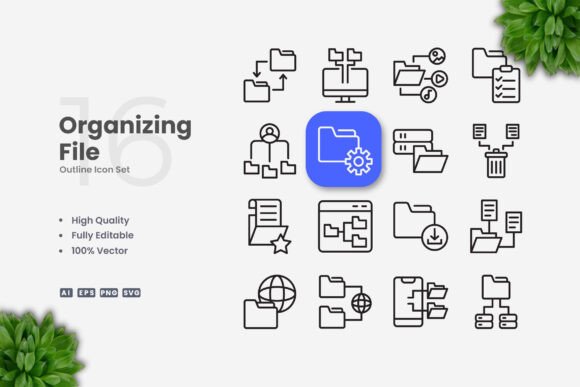
Organizing File Icons: A Practical Guide for Clean and Versatile Design
Organizing File Icons is more than just a set of images—it’s a tool that helps you bring clarity, consistency, and professionalism to your projects. Whether you’re designing a website, creating a mobile app, or preparing materials for print, these icons can make a big difference in how information is communicated. Their clean and simple design ensures they fit seamlessly into a wide range of visual styles, making them a go-to resource for creators and professionals alike.
Why Use Organizing File Icons?
Imagine you're working on a project that requires a series of icons for file organization—like folders, documents, spreadsheets, or presentations. Without a cohesive set, the design might look cluttered or unprofessional. That’s where Organizing File Icons comes in. These icons are designed with simplicity in mind, allowing them to be easily recognizable while maintaining a modern aesthetic.
They’re especially useful when you need to represent digital or physical files in a way that’s both intuitive and visually appealing. For instance, if you’re developing an app that lets users manage their documents, having a consistent icon set can improve user experience by making navigation more straightforward.
Real-World Applications of Organizing File Icons
One of the most common uses for Organizing File Icons is in web design. If you're building a content management system, a cloud storage platform, or even a personal blog, these icons can help users quickly identify different types of files. They work well in dashboards, menus, and file listings, providing a clear visual hierarchy without overwhelming the viewer.
For mobile apps, the same principles apply. Whether it's a productivity tool, a note-taking app, or a file-sharing service, having a clean and consistent icon set can enhance usability. Users don’t have to guess what each icon represents—they can immediately understand its purpose.
In educational settings, these icons can be used in e-learning platforms, digital textbooks, or interactive presentations. Teachers and students can benefit from visual cues that make navigating through course materials easier. For example, an icon representing a PDF document can help students quickly locate downloadable resources.
Who Benefits from Using Organizing File Icons?
Entrepreneurs and small business owners often use these icons to create professional-looking marketing materials. Whether it's a brochure, a social media post, or a banner ad, having a set of high-quality icons can elevate the overall design and make the message more engaging. It also saves time compared to creating custom icons from scratch.
Freelancers and designers who work on multiple projects will appreciate the versatility of Organizing File Icons. Since they’re fully customizable, they can be adapted to match the brand identity of any client. This flexibility makes them a valuable addition to any designer’s toolkit.
Bloggers and content creators can use these icons to enhance their visual storytelling. Whether it's a guide on file management or a tutorial on organizing digital assets, icons can break up text and make the content more digestible. They also add a professional touch that can increase reader engagement.
What to Consider Before Using Organizing File Icons
Before you start using Organizing File Icons, it’s important to think about the context in which they’ll be used. Are they going to be part of a larger design? Will they be scaled for different sizes? Understanding the intended use helps ensure that the icons remain clear and effective at any size.
Another consideration is color and style. While the icons are designed to be simple, you may want to adjust their colors to match your brand or theme. The ability to edit stroke weight and color makes this process straightforward, but it’s still worth planning ahead to avoid unnecessary changes later.
It’s also helpful to check the file formats provided. Most sets include AI, EPS, SVG, and PNG files, which are compatible with a variety of design software. Knowing which tools you’ll be using can help you choose the right format and avoid compatibility issues.
How to Make the Most of Organizing File Icons
Once you’ve selected the right icons, the next step is to integrate them into your project. For websites, you can use the SVG files to maintain crisp visuals at any resolution. For print materials, the PNG files with transparency offer flexibility in layout and design.
If you’re working on a digital project, consider using the icons in combination with other elements like buttons, menus, or navigation bars. This creates a cohesive visual language that improves the overall user experience. For example, a folder icon paired with a document icon can help users quickly find related files.
For those new to design, the Readme.txt file included in the package can provide helpful guidance on how to use the icons effectively. It often includes tips on scaling, color adjustments, and best practices for different applications.
Final Thoughts on Organizing File Icons
Organizing File Icons isn’t just about aesthetics—it’s about functionality. By choosing a set that’s clean, customizable, and versatile, you can save time, improve clarity, and enhance the overall quality of your work. Whether you're a designer, educator, entrepreneur, or everyday user, these icons offer a practical solution for a wide range of needs.
As you explore the possibilities, remember that the key to success lies in understanding your audience and the context in which the icons will be used. With the right approach, Organizing File Icons can become an essential part of your creative or professional toolkit.