Mouse Icons for Streamlined Design Workflows
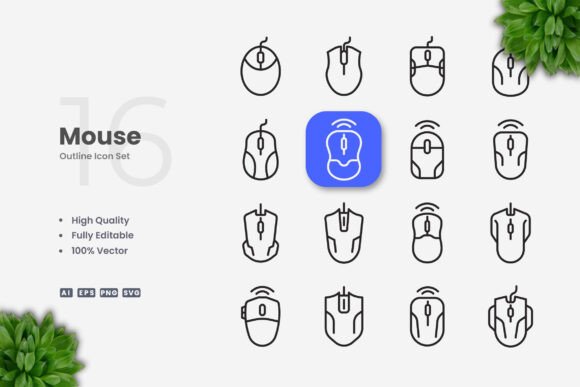
Mouse Icons are a versatile set of visual elements designed to enhance user interfaces and digital experiences. These icons serve as essential components in the design process, offering clarity, consistency, and aesthetic appeal across various platforms. Whether you're working on a website, mobile app, or print material, Mouse Icons provide a foundation for effective communication through visual language.
Designed with simplicity and cleanliness in mind, these icons are ideal for professionals who prioritize efficiency and quality. Their scalable vector format ensures that they maintain sharpness at any size, making them suitable for use in diverse contexts—from social media graphics to large-scale banners. The ability to customize stroke weight, color, and other attributes allows for seamless integration into existing design systems.
Integrating Mouse Icons into Your Workflow
Mouse Icons can be incorporated at multiple stages of a project, from initial planning to final execution. Before starting a design task, these icons can help establish a visual framework that aligns with your brand identity. During the development phase, they offer a consistent reference point for maintaining visual harmony across different elements. After the project is complete, they can be used for updates, revisions, or new iterations without requiring a complete redesign.
For designers, developers, and content creators, Mouse Icons streamline the workflow by reducing the need to create custom graphics from scratch. This not only saves time but also ensures that the final output maintains a professional look and feel. By leveraging pre-designed icons, teams can focus more on functionality and less on repetitive design tasks.
Customization and Flexibility
One of the key advantages of Mouse Icons is their high level of customization. With 100% vector files available in formats like AI, EPS, SVG, and PNG, users have the freedom to modify colors, strokes, and other properties to match their specific needs. This flexibility is especially valuable when working with different platforms or design software, as it ensures compatibility and adaptability.
Editing these icons in vector-based programs such as Adobe Illustrator or CorelDRAW is straightforward. Users can adjust stroke weights, change fill colors, or even restructure elements to fit unique requirements. This level of control makes Mouse Icons an excellent choice for projects that demand a tailored approach without compromising on quality.
Practical Use Cases
Mouse Icons find application in a wide range of scenarios, making them a valuable addition to any designer’s toolkit. For instance, in web development, these icons can be used to represent navigation elements, interactive features, or status indicators. In mobile app design, they contribute to intuitive user interactions by providing clear visual cues.
For print materials such as flyers, posters, or brochures, Mouse Icons add a modern touch that enhances readability and engagement. Their clean lines and minimalist style make them particularly effective in infographics, where visual clarity is crucial. Social media content can also benefit from these icons, as they help convey messages quickly and effectively across different platforms.
Workflow Tips and Best Practices
To get the most out of Mouse Icons, consider implementing a few best practices. First, organize your icon library to ensure easy access during the design process. This can be done by categorizing icons based on function, theme, or project type. Keeping a well-structured collection helps maintain efficiency and reduces the time spent searching for the right element.
When integrating Mouse Icons into a project, it's important to maintain consistency in style and scale. This involves ensuring that all icons within a set share similar proportions, line weights, and color schemes. Consistency not only improves the visual appeal but also enhances usability by creating a cohesive user experience.
Another useful tip is to test icons in different contexts before finalizing their use. This includes checking how they appear on various screen sizes, backgrounds, and lighting conditions. Testing helps identify potential issues and ensures that the icons perform well in real-world scenarios.
Compatibility and File Management
Mouse Icons come in multiple file formats, including AI, EPS, SVG, and PNG, which ensures compatibility with a wide range of design and editing tools. This versatility is especially beneficial for teams that use different software or work across multiple platforms. The inclusion of a Readme.txt file further simplifies the process by providing instructions on how to use and manage the files effectively.
Proper file management is essential for maintaining the integrity of your design assets. This includes keeping backups of source files, organizing downloaded assets in a structured manner, and updating files as needed. By following good file management practices, users can avoid confusion and ensure that their design resources remain accessible and usable over time.
Long-Term Value and Quality Control
The long-term value of Mouse Icons lies in their durability and adaptability. As design trends evolve, these icons can be updated or modified to reflect new styles while retaining their core functionality. This makes them a cost-effective solution for businesses and individuals who require reliable design assets over an extended period.
Quality control is another critical aspect of using Mouse Icons. Ensuring that each icon meets the required standards for resolution, clarity, and scalability is essential for maintaining a professional appearance. Regular reviews and updates can help address any issues and ensure that the icons continue to meet the needs of the project or business.